
Understanding D3 and D4 Wood Glue Ratings in Construction Procurement
Back to blogUnderstanding D3 and D4 Wood Glue Ratings in Construction Procurement
Understanding D3 and D4 Wood Glue Ratings in Construction Procurement
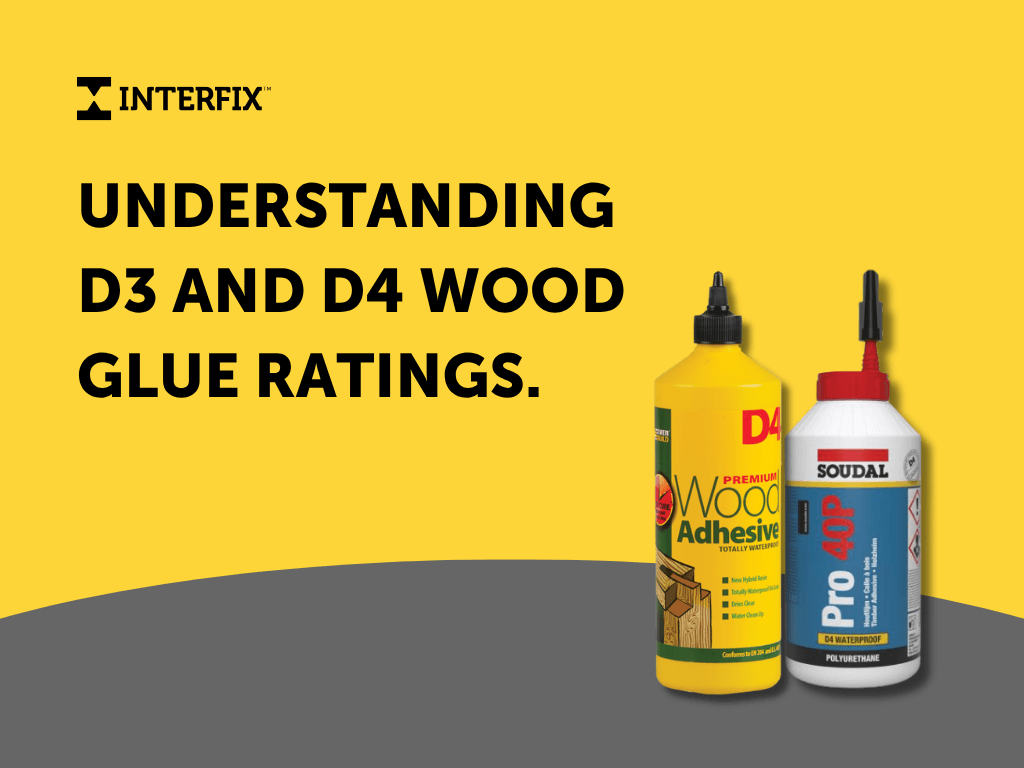
Wood glue sounds straightforward until someone on site asks for “the D4 stuff” and suddenly there are multiple products being discussed, all with different cure times, application methods, and performance characteristics.
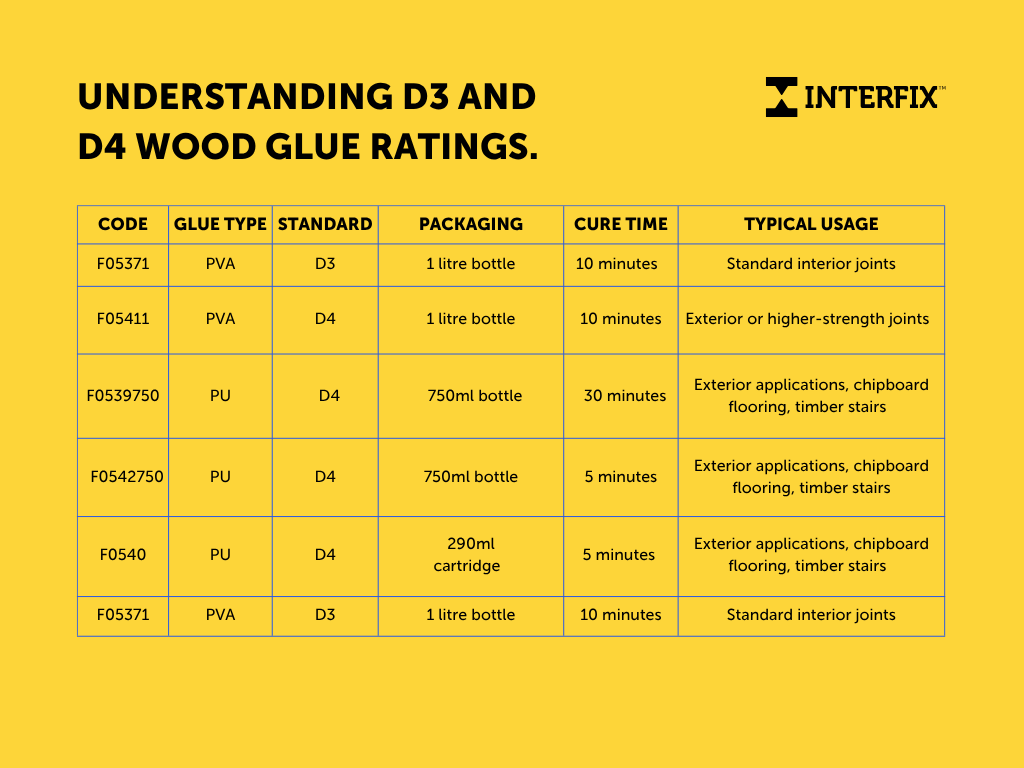
To make things easier, here’s a quick reference guide covering the main differences between D3 and D4 adhesives, along with the most commonly supplied options.
Quick Reference Guide
________________________________________
One of the most common misconceptions around wood adhesives is that D3 and D4 refer to different types of glue.
They do not.
D3 and D4 are performance classifications linked to moisture resistance and durability. The actual glue itself may still be either PVA-based or polyurethane-based, and that distinction has a major impact on how the product behaves on site.
Understanding that difference helps procurement managers, buyers, and site teams avoid specification issues, reduce waste, and make sure the right product arrives first time.
What Does D3 Actually Mean?
D3 adhesives are generally classed as water-resistant rather than waterproof.
In most cases, these are PVA-based wood glues. They are typically cream or white when applied and dry clear once cured, making them a popular choice for internal joinery and finishing work.
Typical applications include:
• Interior joinery
• Furniture assembly
• Timber mouldings
• Kitchens and fitted interiors
• General woodworking where occasional moisture exposure may occur
For many housebuilding and fit-out projects, D3 adhesives are more than suitable.
They are clean to apply, easy to work with, and do not expand during curing. That matters on finishing work where excessive adhesive movement can create unnecessary snagging, sanding, or clean-up time.
Where D4 Changes Things
D4 adhesives are designed for higher moisture exposure and more demanding applications.
This is often where confusion begins, because D4 products exist in both PVA and PU formulations.
Traditional PU-based D4 adhesives are usually brown in colour and expand slightly as they cure. They react with moisture in the air, helping them bond uneven surfaces and fill small gaps during installation.
That makes them particularly common for:
• Chipboard flooring
• Timber stair installations
• Exterior timber applications
• Structural bonding where moisture resistance is critical
The expanding characteristic can be extremely useful on uneven substrates or flooring systems where movement and squeaking need to be reduced.
At the same time, expansion is not always desirable.
If a cleaner finish is required, excess foam can create additional finishing work, especially in visible joinery applications.
This is why modern D4 PVA adhesives have become increasingly popular. They provide stronger water resistance than D3 PVAs without the foaming behaviour associated with PU products.
In practical terms, that means buyers can specify a waterproof adhesive while still benefiting from a cleaner application process.
Why This Matters During Procurement
From a procurement perspective, wood glue selection is rarely just about cost per bottle.
The wrong specification can affect:
• Installation speed
• Labour efficiency
• Finishing quality
• Product wastage
• Snagging time
• Long-term durability
A site ordering expanding PU adhesive where a clean-finish D4 PVA would have been more appropriate may create unnecessary clean-up work across multiple plots.
Equally, using a D3 adhesive in an area exposed to higher moisture levels could create performance issues that are far more expensive to rectify later.
Small specification details often become much larger operational problems once materials reach site.
Questions Worth Asking Before Ordering
Before placing an order, it helps to clarify a few practical points:
• Is the adhesive PVA or PU based?
• Does the application require water resistance or full waterproof performance?
• Is expansion beneficial for the installation?
• Will expansion create additional finishing work?
• What cure time is required based on programme pressures?
• Is the product supplied in bottles or cartridges?
• Is the application internal or external?
These are relatively simple questions, but they often determine whether the product genuinely suits the environment it is being used in.
Supporting Site Teams with the Right Product Selection
Procurement works best when specification decisions reflect the reality of installation on site.
Adhesives are a good example of this. Products that appear similar on paper can behave very differently once they are being applied across active developments under time pressure.
Understanding the difference between D3 and D4 ratings, alongside the behaviour of PVA and PU formulations, helps buyers make more informed decisions and gives site teams greater confidence in the products arriving on site.
To explore Interfix’s adhesive and fixing product range, view the products here.
