
Are Your Workers Properly Protected From Construction Site Noise?
Back to blogAre Your Workers Properly Protected From Construction Site Noise?
HSE estimates that around 15,000 people in Great Britain experience hearing problems caused or made worse by work each year.
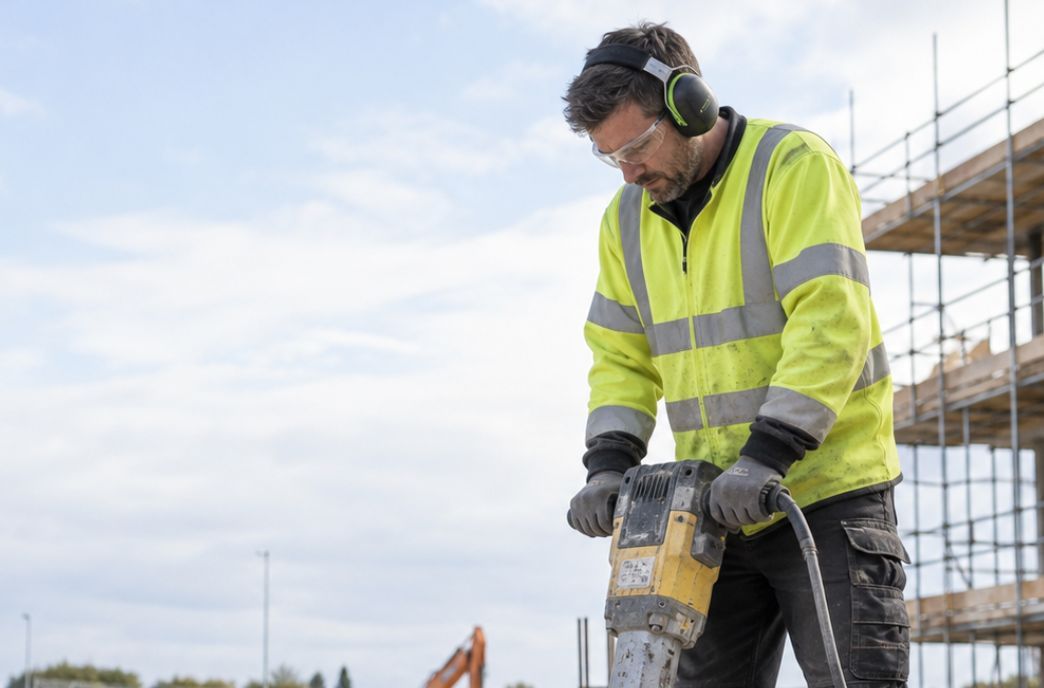
Construction is considered a high-risk industry for noise-related ill health. Workers may be exposed to concrete breakers, grinders, hammer drills, heavy plant and other noisy equipment throughout the working day.
For procurement and H&S teams, protecting workers involves more than adding earplugs or earmuffs to an approved product list. The protection must be suitable for the noise level, working environment and other PPE being worn.
When does site noise become a concern?
Noise exposure depends on how loud the sound is and how long someone is exposed to it.
As a simple guide, HSE says there may be a noise problem if workers need to raise their voices to hold a normal conversation around two metres apart. Regular use of noisy tools for more than half an hour a day may also require further assessment.
View the HSE statistics on work-related hearing loss.
HSE data also shows how much noise levels can vary between common construction tasks. Indicative levels include:
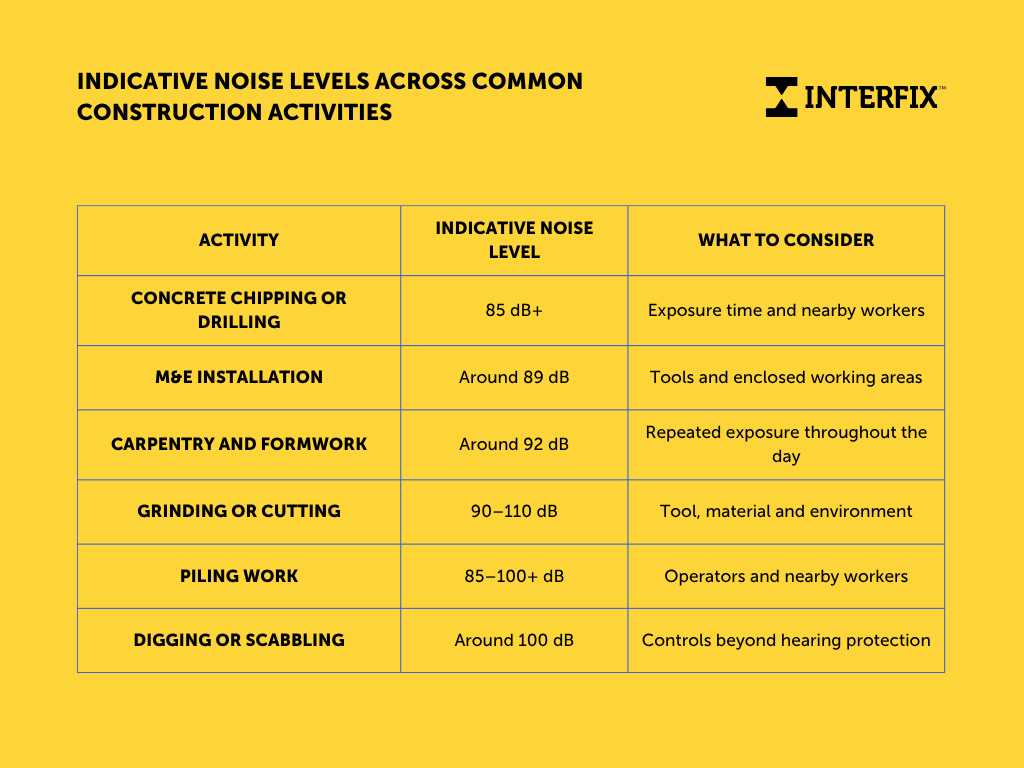
These figures are indicative. Actual exposure should be assessed using reliable information that reflects the equipment, task and site conditions.
View the HSE guidance on assessing construction noise.
Hearing protection should not be the first control
Earplugs and earmuffs do not remove noise from the site.
HSE advises controlling noise through technical and organisational measures before relying on personal hearing protection. This could include choosing quieter tools, maintaining equipment properly, changing the working method or limiting the number of people in a noisy area.
Hearing protection should be used where additional protection is still required or as a temporary measure while other controls are introduced.
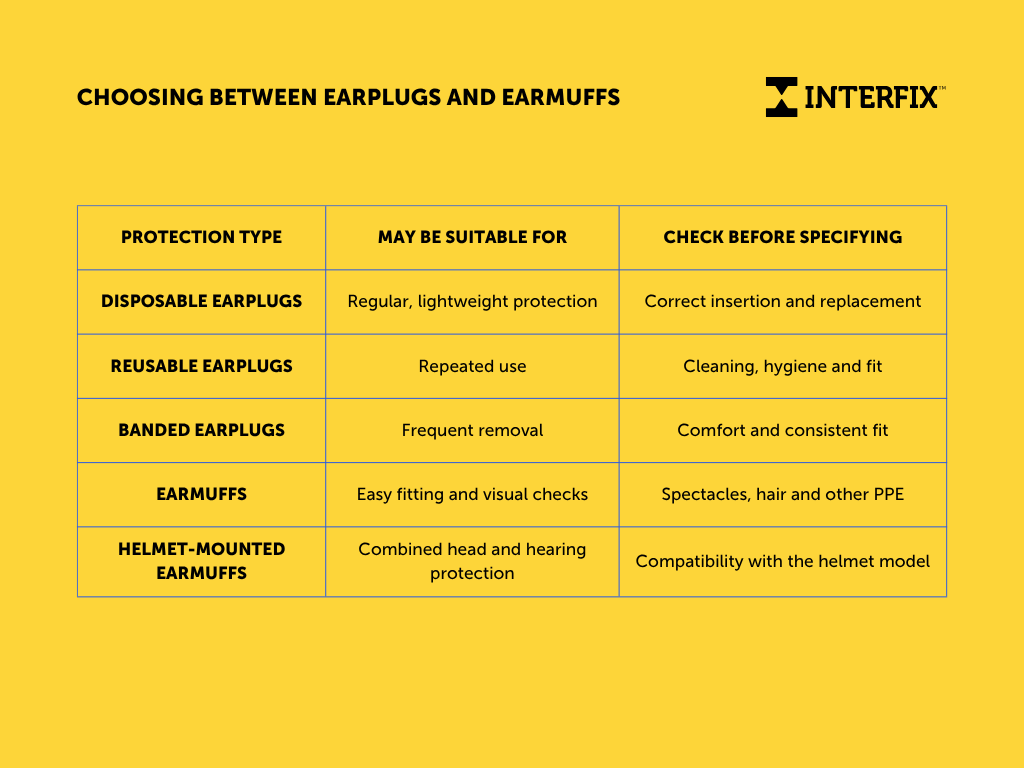
Earplugs or earmuffs?
There is no single type of hearing protection that suits every worker or task.
The choice should take account of how often the protection needs to be removed, the working conditions, hygiene and whether it will be worn with a helmet or other PPE.
Comfort also matters. Protection that is uncomfortable or interferes with other PPE is less likely to be worn correctly throughout the task.
More protection is not always better
Selecting the product with the highest rating may sound like the safest approach, but excessive protection can create different risks.
HSE advises avoiding protection that reduces the level at the ear below 70 dB. Overprotection can make communication difficult and prevent workers from hearing alarms, warnings or moving vehicles.
Hearing protection should reduce exposure to a suitable level without unnecessarily isolating the worker from the surrounding environment.
What does the SNR rating mean?
The Single Number Rating, or SNR, indicates the level of noise reduction a hearing protector can provide under test conditions. A higher number means greater attenuation, but it does not automatically make the product a better choice for every task.
SNR should be considered alongside the assessed noise level, the length and pattern of exposure and the manufacturer’s performance data. HSE’s hearing-protection calculator can then be used to check whether the selected product provides suitable protection without overprotecting the wearer.
Read the HSE hearing-protection guidance.
Check compatibility with other PPE
Hearing protection rarely works in isolation on a construction site.
Workers may also need to wear helmets, safety glasses, face protection or respiratory protective equipment. These items can interfere with each other if they have not been selected as a compatible setup.
The seal of an earmuff may be affected by spectacle arms, helmet fittings, hair or clothing. Helmet-mounted protection must also be approved for use with the specific helmet.
Before approving a product, procurement teams should check:
- The assessed noise level and duration of exposure
- The required level of protection
- Compatibility with the worker’s helmet and other PPE
- Fit, comfort and suitability for the task
- Cleaning and maintenance requirements
- How replacement products will be supplied
- Whether workers have been shown how to fit the protection correctly
A more practical approach to hearing protection procurement
For organisations managing several construction sites, the answer is not necessarily to supply the same earplug or earmuff for every task.
A better approach is to identify common noise exposures, agree suitable protection for each risk category and make those options easy for site teams to order consistently.
This gives procurement greater control while helping H&S teams ensure that protection reflects the work taking place.
Reviewing hearing protection or wider PPE requirements across your sites? Speak to Interfix about suitable options for different working environments.
Interfix. Greater control. Less admin. Zero hassle.
This article provides general information and does not replace a suitable noise-risk assessment, competent advice or manufacturer guidance.
