
Are You Underestimating the Risk of Lithium-Ion Batteries on Site?
Back to blogAre You Underestimating the Risk of Lithium-Ion Batteries on Site?
Lithium-ion batteries are used across construction sites every day. They power drills, saws, impact drivers and an increasing range of cordless equipment.
That familiarity can make the risk easy to overlook.
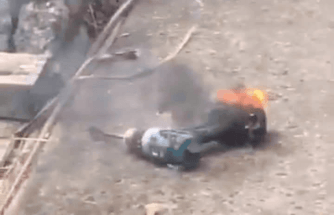
In April 2023, a lithium-ion battery pack being charged for a cordless power tool was believed to have started a fire at a motorcycle workshop in Bermondsey. Six fire engines and around 40 firefighters attended, while half of the workshop was damaged by fire.
Fortunately, nobody was injured. However, the incident shows how quickly the failure of a relatively small battery can become a major property fire.
Read the London Fire Brigade incident report. (London Fire Brigade)
Why Lithium-Ion Battery Fires Are Different
A lithium-ion battery can fail after being damaged, crushed, penetrated, overheated, short-circuited or incorrectly charged.
This can trigger thermal runaway, where increasing heat causes further cells within the battery to fail.
Phil Clark of the National Fire Chiefs Council, quoted in guidance published by Zurich, explains:
“Once thermal runaway commences, the process generally only ceases when the battery cells have completely burned out.”
Zurich’s guidance also warns that a failing battery can produce extremely hot jet-like flames alongside a toxic and potentially explosive vapour cloud. (Zurich Insurance UK)
For a construction site, the consequences can extend beyond the initial fire. They can include:
- Damage to site cabins, tools and stored materials
- Injury from fire, explosion or toxic gases
- Loss of equipment belonging to contractors
- Restricted access to the site
- Programme delays and business interruption
- Increased insurance costs
- Reputational and contractual consequences
Zurich reports an increase in fire claims linked to overcharged power-tool stations. It also highlights the particular risk posed by site offices, where paperwork, furniture and other combustible materials can allow a small fire to spread. (Zurich Insurance UK)
A Growing Concern for Insurers
This is no longer being treated as an isolated or unusual risk.
Allianz says it is seeing a significant increase in property fire claims caused by lithium-ion batteries. It warns that the way batteries are used, stored, charged and handled can create a risk of fire, explosion, injury and property damage.
Read Allianz’s lithium-ion battery guidance. (Allianz Insurance)
Alice Wilson, a partner at Weightmans LLP, has also warned of:
“A marked increase in the number of construction, property damage, business interruption and liability claims.”
Her advice is that construction businesses should ensure lithium-ion battery risks are properly addressed within their procedures and project documentation. (Zurich Insurance UK)
The question for procurement teams and site managers is therefore not simply whether batteries are being charged.
It is whether they are being charged in a way that limits the consequences if one fails.
What Should Good Battery Charging Look Like?
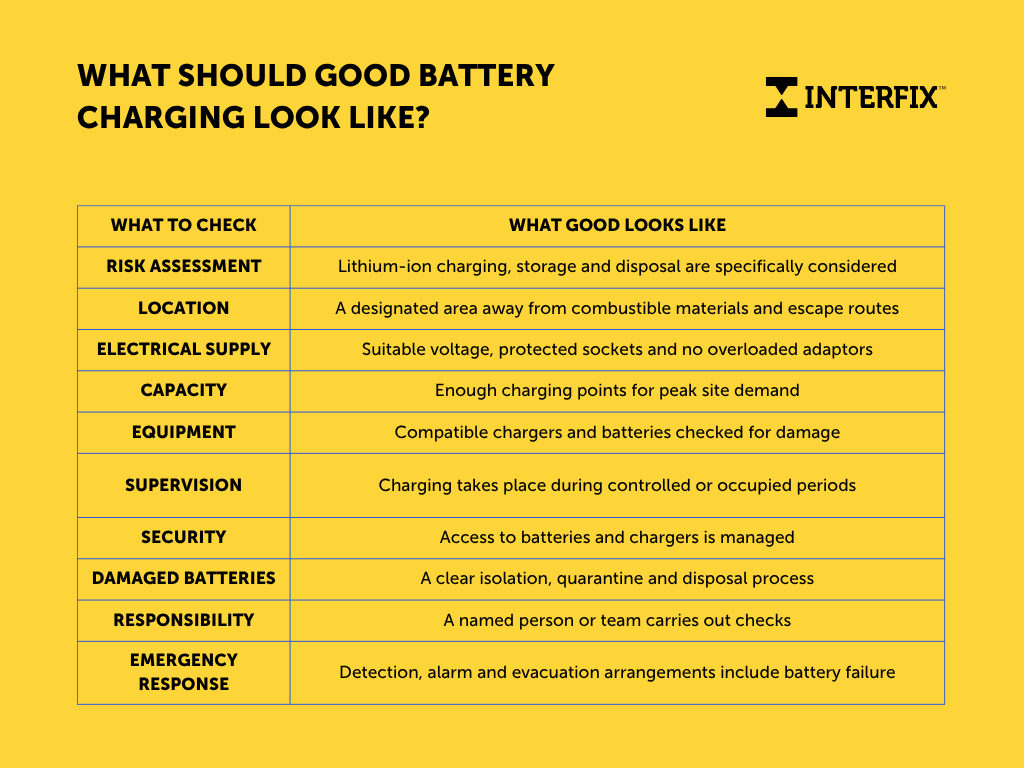
Start With the Risk Assessment
A charging cabinet, locker or station may form part of the solution, but it should not be treated as the entire solution.
The first step is understanding how batteries are used across the site:
- How many batteries and chargers are currently in use?
- How many will be needed during the busiest phase?
- Where are batteries being charged and stored?
- Are any batteries left charging overnight?
- Are different battery platforms being used?
- Who checks batteries, chargers and electrical connections?
- What happens when damaged equipment is identified?
- Could a fire affect a site cabin, material store or escape route?
Zurich recommends including lithium-ion battery risks within project plans and site fire-management arrangements. It also advises construction teams to consider charging locations carefully, avoid overnight charging where possible and provide suitable disposal routes for spent or damaged batteries.
Read Zurich’s construction-specific guidance. (Zurich Insurance UK)
Aviva has also produced construction-specific guidance to help reduce the risks associated with charging lithium-ion batteries used in power tools, plant and other site equipment.
View Aviva’s lithium-ion risk-management resources. (Aviva)
Choose the Charging Location Carefully
Batteries should not be charged wherever a spare socket happens to be available.
Charging should take place in a clearly designated area away from:
- Timber, cardboard and packaging
- Fuel, paint and chemicals
- Paperwork and office furniture
- Emergency exits and escape routes
- Areas where batteries could be struck or damaged
- Rain, standing water and extreme temperatures
Site cabins can present a particular problem. Chargers may initially be positioned neatly, but more are often added as trades arrive. Extension leads appear when sockets run out, while batteries are placed on desks, shelves or floors beside combustible materials.
The charging location should be selected through the site-specific fire risk assessment, taking account of the equipment, battery volumes, building materials and emergency arrangements.
Check the Electrical Setup
Adding more chargers does not automatically mean the existing electrical supply can support them safely.
HSE guidance says employers should:
- Carry out a risk assessment
- Confirm that equipment is suitable for its intended use
- Check that equipment remains in good condition
- Ensure equipment is suitable for the electrical supply
- Confirm that the supply can provide the required current
- Remove damaged equipment from use
- Arrange appropriate inspections by competent people
Read the HSE guidance on electrically powered work equipment. (HSE)
Before installing a charging setup, check:
- The required voltage
- The number of chargers operating simultaneously
- The total expected electrical load
- The condition and rating of sockets and cables
- Whether additional fixed sockets or circuits are required
- Whether suitable electrical protection is provided
Daisy-chained extension leads, overloaded adaptors and damaged cables introduce additional hazards and should not become a substitute for properly planned capacity.
Plan for Peak Demand
Charging capacity should be based on the busiest stage of the project, not the number of batteries visible during the early phases.
Once more trades arrive, the number of batteries and chargers can increase quickly. When the designated area becomes full, unofficial charging points tend to appear in offices, stores and welfare cabins.
Procurement teams should consider:
- How many workers will need access
- How quickly batteries must be turned around
- How many battery platforms will be used
- Whether contractors bring their own chargers
- How the charging requirement will change during the programme
Providing sufficient capacity helps prevent improvised sockets, overcrowded charging areas and batteries being left in unsuitable locations.
Check Batteries and Chargers Before Use
Only chargers approved or confirmed as compatible with the battery should be used.
Batteries and chargers should be removed from service when there are signs of:
- Cracks or impact damage
- Swelling or deformation
- Leaks or staining
- Unusual heat
- Strong or unexpected smells
- Hissing, popping or other unusual noises
- Burn marks or evidence of overheating
- Damaged cables, plugs or connections
- Unusual charging behaviour
London Fire Brigade advises using the correct charger, protecting batteries against physical damage and unplugging chargers once charging is complete.
Read London Fire Brigade’s battery and charger safety advice. (London Fire Brigade)
Create a Clear Quarantine Process
Damaged batteries need a controlled isolation and disposal process.
Leaving a battery on a desk with a handwritten note does not prevent somebody from returning it to use. It may also leave a potentially unstable battery beside combustible materials.
The site procedure should explain:
- Where damaged batteries must be isolated
- Who should be notified
- Who has authority to remove equipment from use
- How the battery will be safely stored while awaiting collection
- Which approved waste or specialist contractor will remove it
Lithium-ion batteries should not be placed in general site waste, where they could be punctured, crushed or exposed to further damage.
Avoid Unattended Charging
Charging arrangements provide limited protection when batteries are left operating without supervision after the site closes.
Zurich recommends avoiding overnight charging where possible. Where it is unavoidable, controls should be introduced to prevent overcharging and manage the additional risk. (Zurich Insurance UK)
A named person or team should be responsible for checking:
- The condition of batteries and chargers
- Whether charging has finished
- Whether equipment has been left unattended
- The condition of plugs, sockets and cables
- Whether unauthorised chargers have appeared
- Whether damaged equipment has been isolated
- Whether the area remains clear of combustible materials
Responsibility should remain clear as contractors, equipment and site layouts change.
Plan for a Failure
Even well-maintained batteries can develop faults, so charging arrangements must be included within the site’s emergency procedures.
Workers should understand:
- How to raise the alarm
- When to evacuate
- How to contact the emergency services
- Which areas must remain clear
- Who is responsible for isolating electrical power, where safe
- Why they should not approach or move a failing battery without suitable procedures and training
Depending on the level of risk, additional controls may include:
- Fire detection and alarms
- Temperature monitoring
- Automatic power isolation
- Fire-resistant separation
- Individual charging compartments
- Purpose-designed containment or suppression systems
The appropriate controls should be selected by a competent person and supported by the fire risk assessment, electrical assessment, manufacturer guidance and insurer requirements.
A Charging Locker Is One Control, Not the Whole Solution
A suitable charging locker or station can help provide security, separation and a more controlled charging location.
However, it cannot compensate for:
- Damaged batteries
- Incompatible chargers
- An inadequate electrical supply
- Insufficient charging capacity
- Poor supervision
- Unclear responsibility
- Missing fire detection
- No quarantine or disposal process
- An emergency plan that ignores battery failure
Safe charging comes from combining appropriate equipment with the right location, behaviours, checks and emergency arrangements.
Final Thought
Lithium-ion batteries have made construction equipment more flexible and convenient, but the arrangements used to charge them must keep pace with the number arriving on site.
For procurement teams, site managers and health and safety leads, the priority should be creating enough controlled charging capacity to prevent overloaded, improvised and unmonitored arrangements.
Interfix can support construction teams with practical site equipment and dependable supply, helping projects stay organised as requirements change.
Interfix. Greater control. Less admin. Zero hassle.
This article provides general information and does not replace a competent, site-specific fire risk assessment, electrical assessment, insurer requirements or manufacturer guidance.
Sources and Further Reading
- London Fire Brigade: Workshop fire in Bermondsey
- London Fire Brigade: Batteries and charger safety
- Zurich: Managing lithium power risks in construction
- Allianz: Lithium-ion battery risk guidance
- Aviva: Lithium-ion risk-management guidance
- HSE: Work using electrically powered equipment
